
Developed a streamlined online acquisition process for business banking customers in Egypt, focusing on automating document verification, enhancing digital assistance, and supporting multilingual interactions. This project aimed to improve user experience, reduce onboarding time, and increase customer satisfaction and acquisition rates.
Date
2023 - 2024
Role
Sole product designer — end to end
Platform
Web Application
My role — I was the only designer on this project and owned it end to end: discovery and research, information architecture, interaction and interface design, prototyping, usability testing, and design QA through to release. I worked directly with Product, Engineering, Compliance and Risk, and the Business teams, and made the design decisions across the journey.
Objectives
The main goal is transforming business customer online acquisition -in Egypt- for streamlined document verification and support multilingual Support
Seamless document verification
Implement a document verification system to reduce manual interventions and expedite document validation.
Target: Achieve a 60% reduction in document verification time while maintaining high accuracy and security standards.
Comprehensive digital assistance
Provide business customers with intelligent, user-friendly digital assistance throughout the account opening journey.
Target: Increase user completion rates by 35% by offering real-time support and guidance.
Empowering native language support
Implement robust multilingual support across the platform.
Target: Increase customer satisfaction by 20% among non-native Arabic speakers by offering seamless interactions in their preferred language.
Visuals are desaturated under NDA. Structure, hierarchy, and flow logic are intact — which is what this case study is about.
Discovery
Problem statement
The current online account opening process for business customers in Egypt is inefficient, with manual document verification, lack of digital assistance, and insufficient multilingual support, leading to customer frustration, delays, and a high abandonment rate.
Challenge
The existing account opening process is plagued by several issues, manual submission and verification of documents lead to delays and errors; business customers struggle with the complexity of the process due to the lack of digital assistance, resulting in confusion and abandonment; and the absence of robust multilingual support limits accessibility, deterring potential customers from diverse linguistic backgrounds.
User needs — hypotheses tested in research
Before research I worked from four hypotheses about what business customers needed, and tested each one. First: a reliable way to submit and verify documents for account opening without delays or errors, with clear step-by-step guidance through the process.
Second: the ability to use the platform in their own language, since language barriers could cause misunderstandings and push people to abandon onboarding.
Third: confidence that personal and business information is handled securely — non-negotiable in this context.
Fourth: a fast process with minimal manual input, and real-time support when something goes wrong. The research that followed tested these against what customers actually reported.
Research
User research
Methods
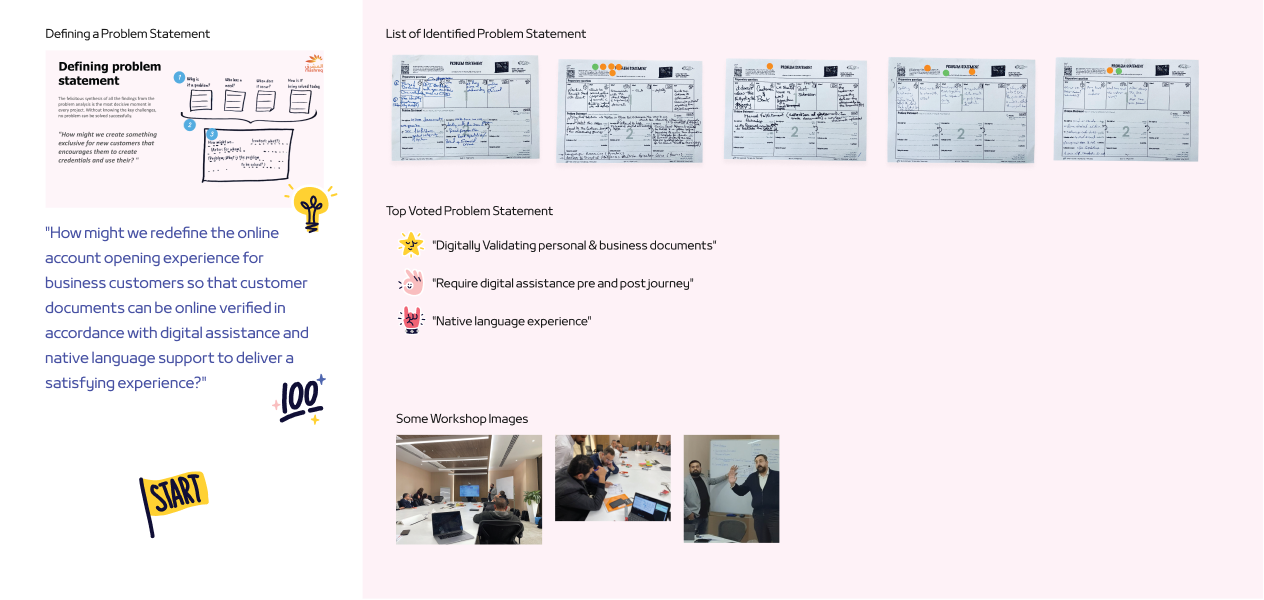
Conducted surveys, interviews, and usability testing sessions to understand the pain points of business customers during the onboarding process.
Key Findings
The research revealed that users were frustrated with the time-consuming document verification process, lacked sufficient guidance, and struggled with language barriers.
Competitive analysis
Benchmarking
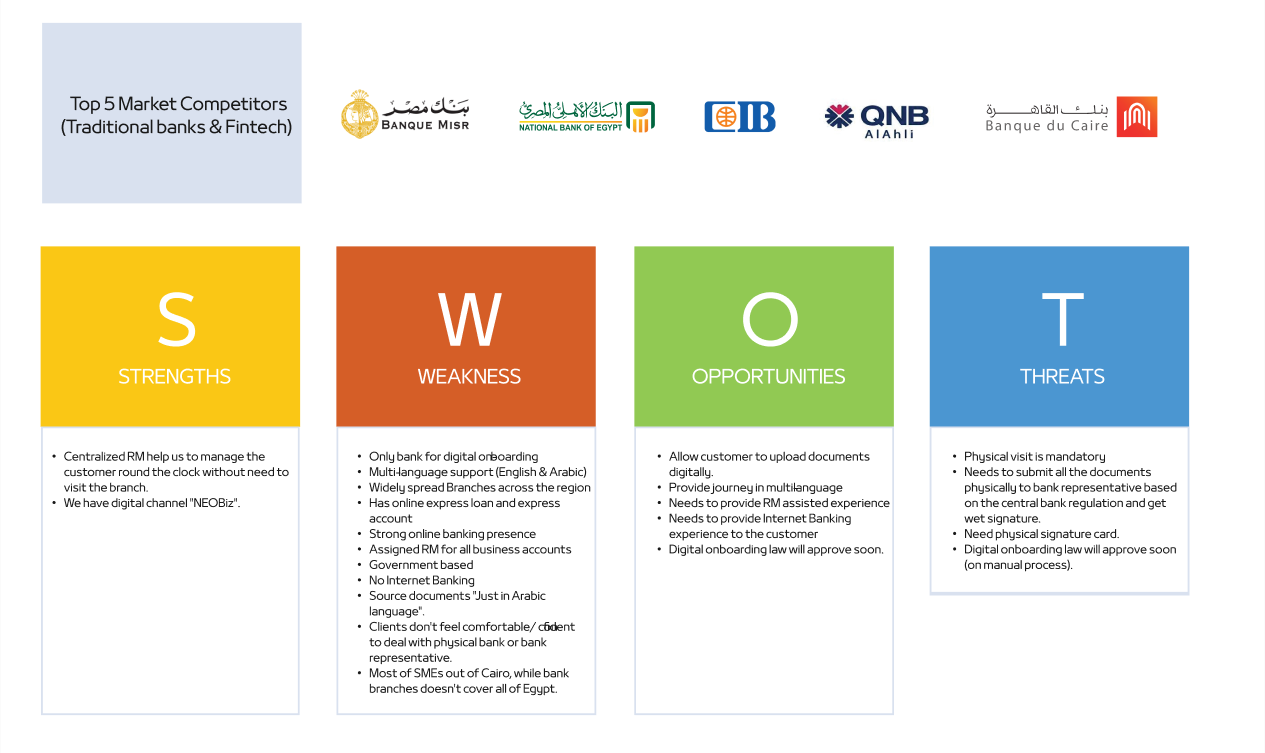
Analysed the onboarding processes of competitors in the Egyptian market, focusing on digital assistance and multilingual support. Competitors with advanced automated solutions had higher user satisfaction and lower abandonment rates.
User personas
Detailed personas
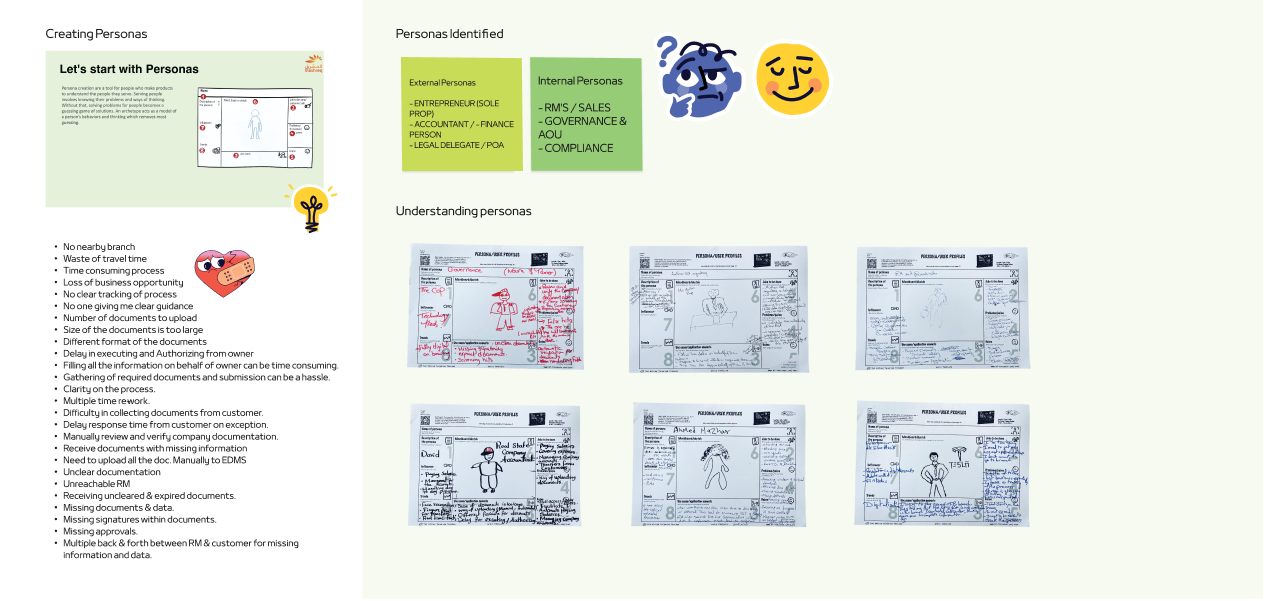
Created personas representing business customers of different backgrounds, highlighting their specific needs for faster document verification, clearer guidance, and language support.
User Journeys
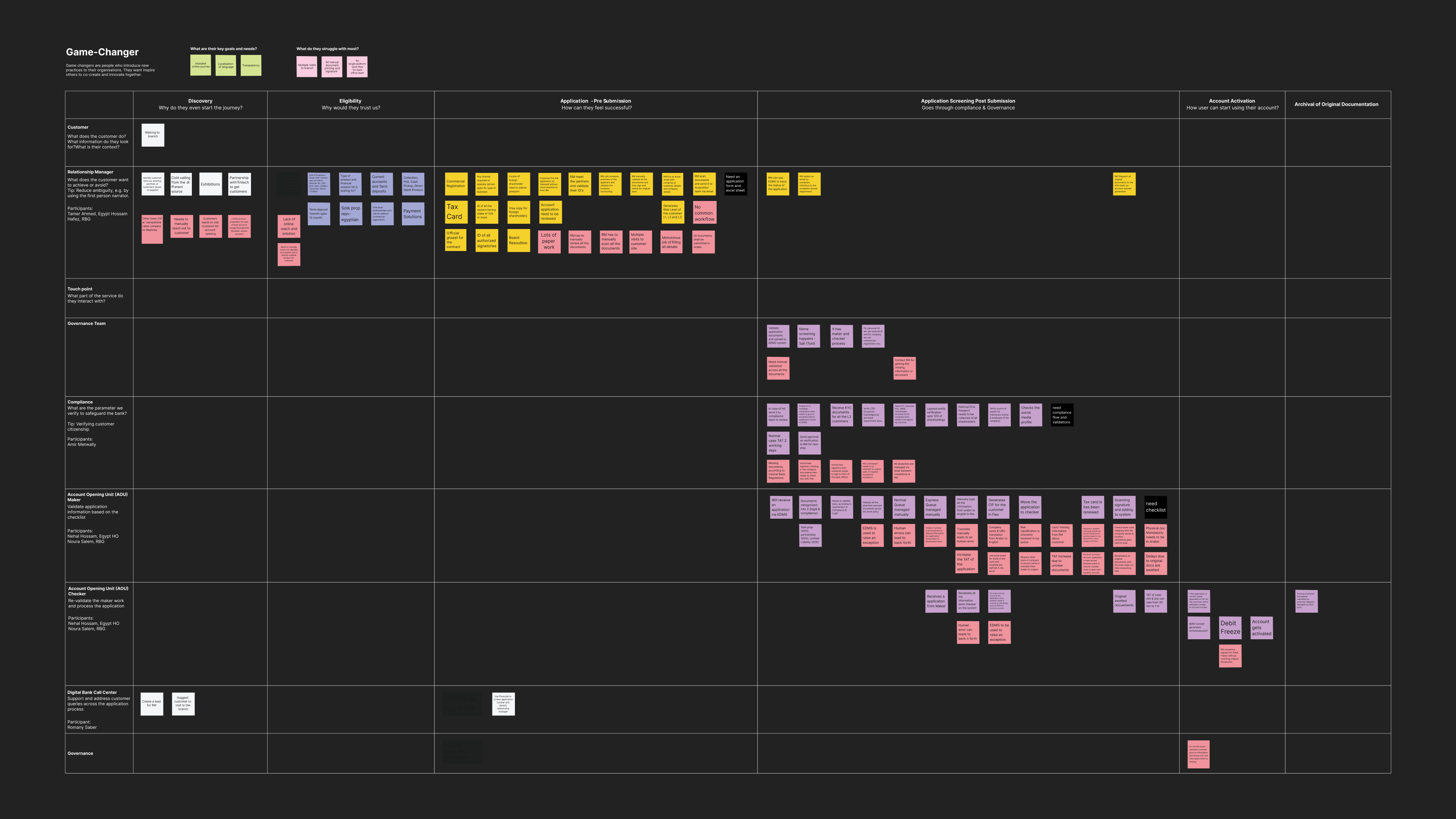
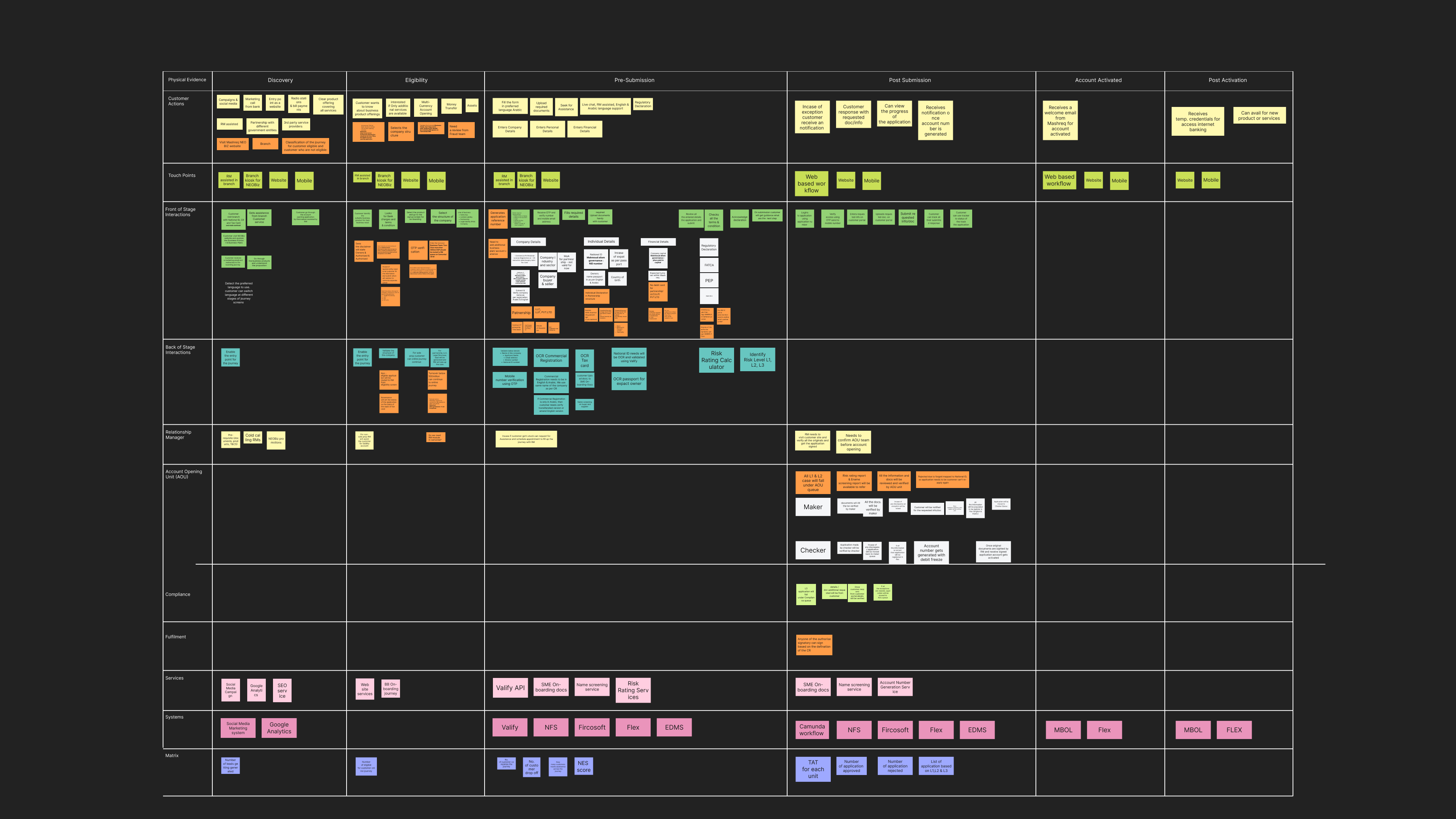
Mapped the steps involved in the onboarding process to identify critical touchpoints where improvements were necessary, such as document submission, verification, and customer support.
Solution
Ideation and Conceptualisation
Brainstorming Sessions
I ran ideation sessions with Product, Engineering, and Compliance, working through options for automating document verification, adding a digital assistant, and building a fully bilingual interface — testing each against what was buildable and what regulation allowed.
Initial Sketches and Wireframes
I created early sketches and low-fidelity wireframes to get the structure right before committing to visual design, and used them to align stakeholders on the flow before moving to high-fidelity prototypes.
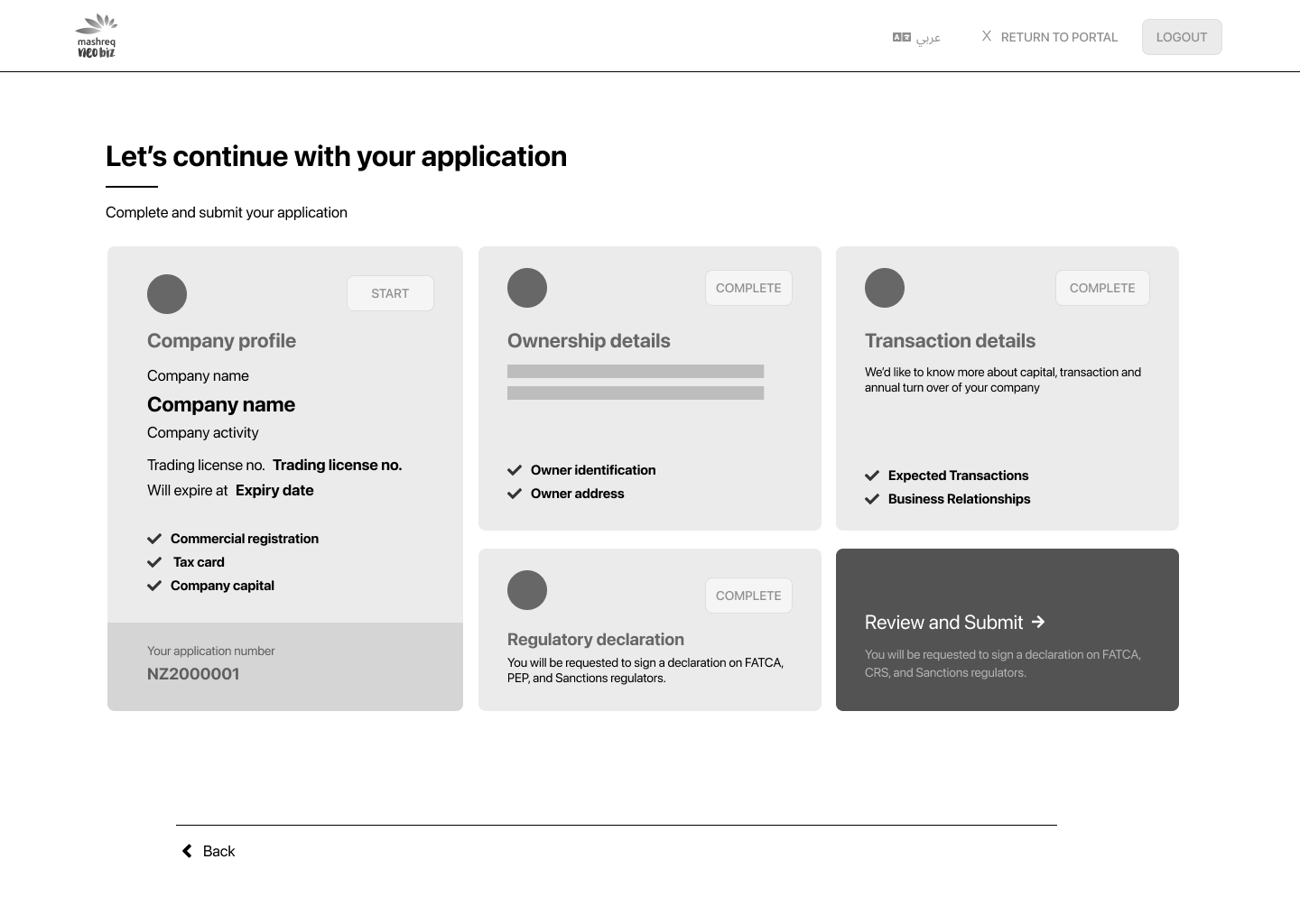
Dashboard
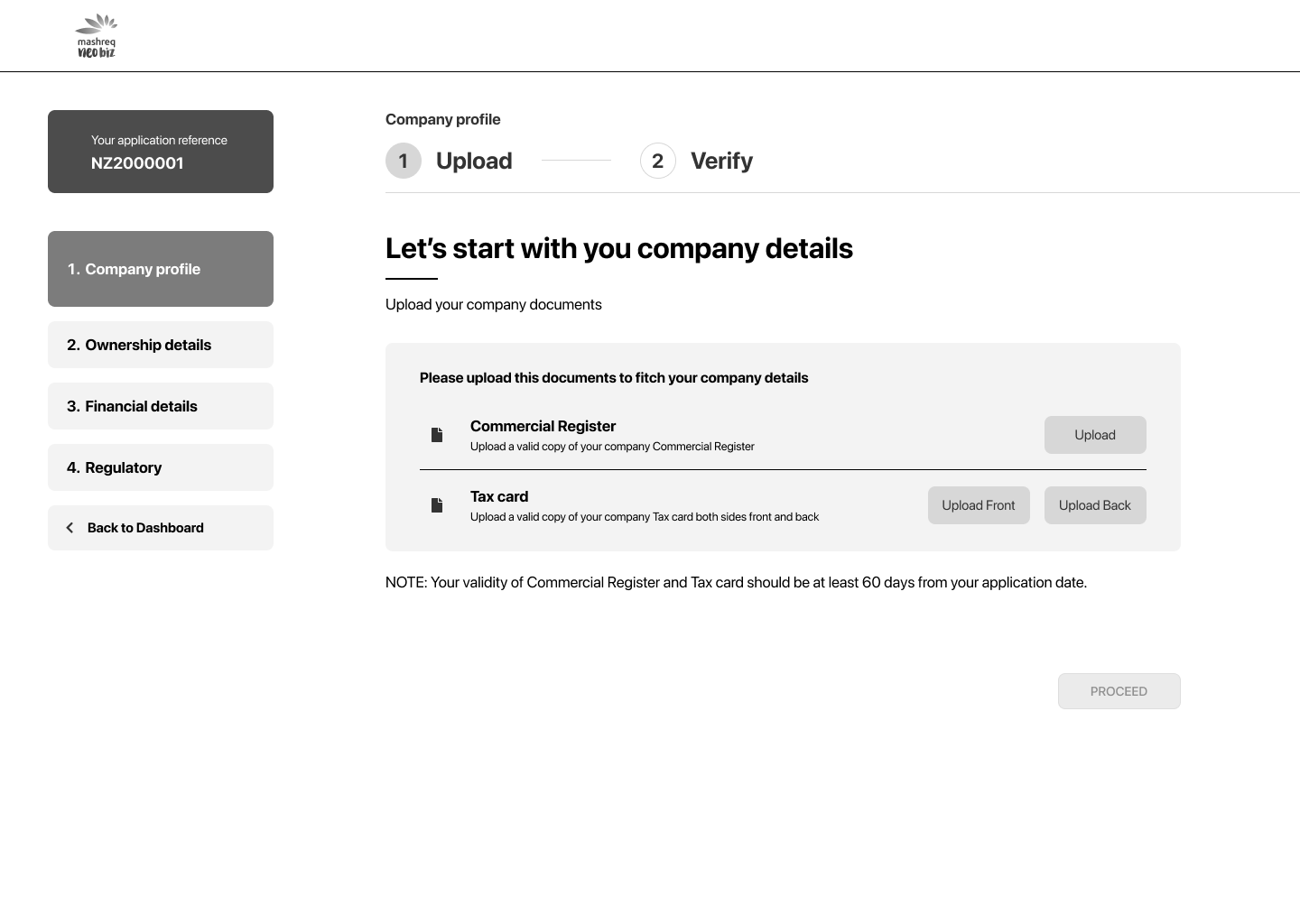
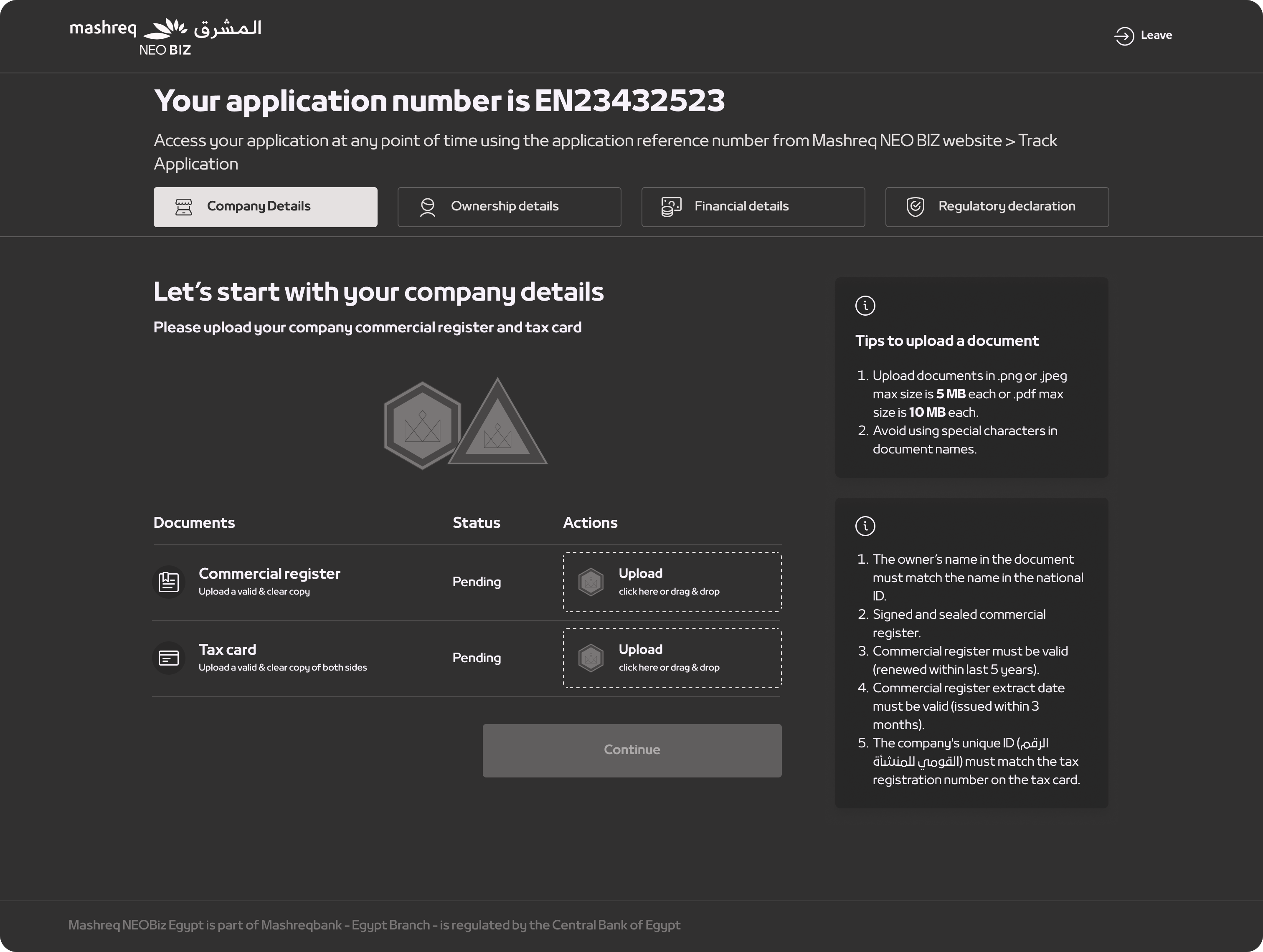
Document upload
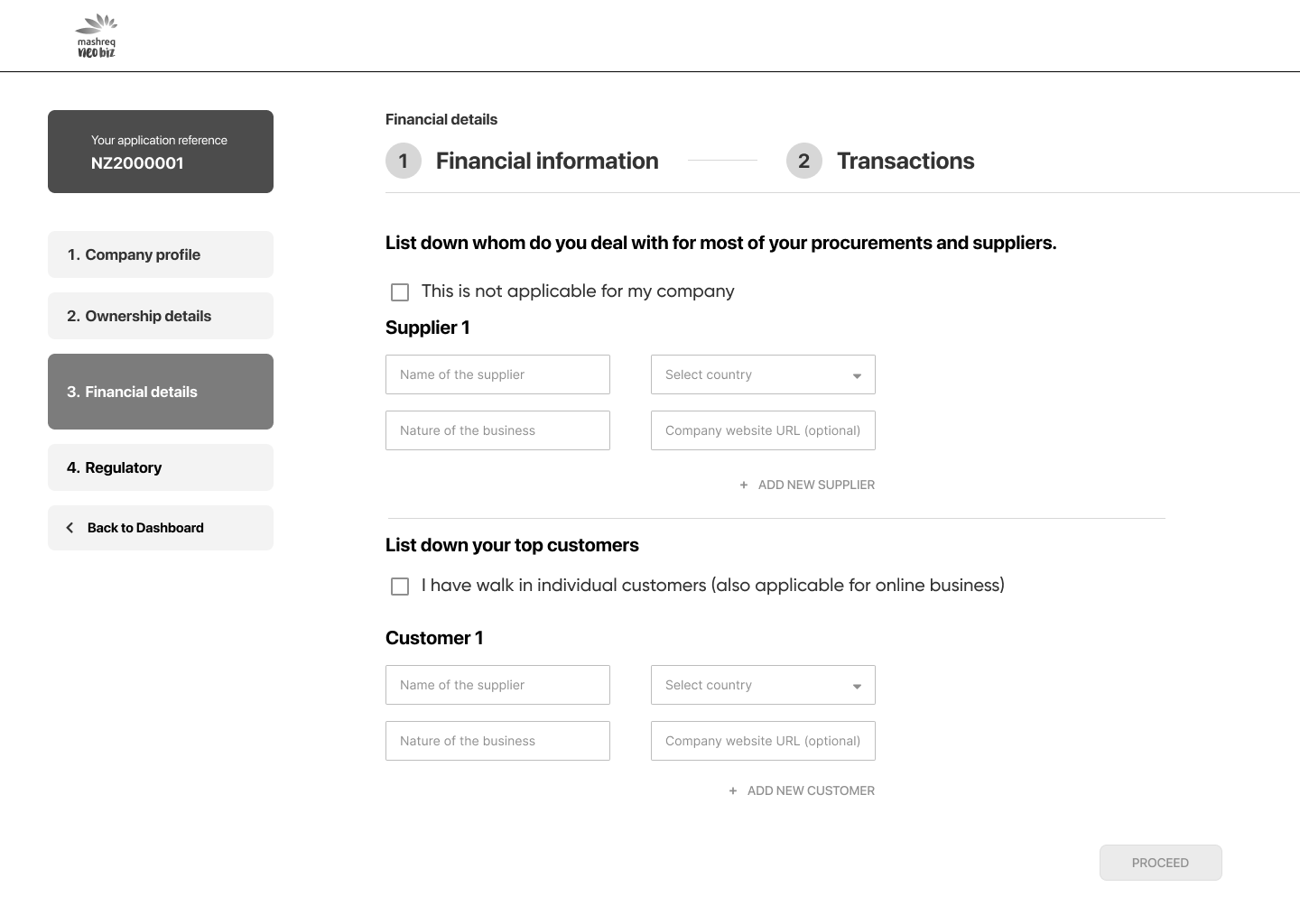
Financial details
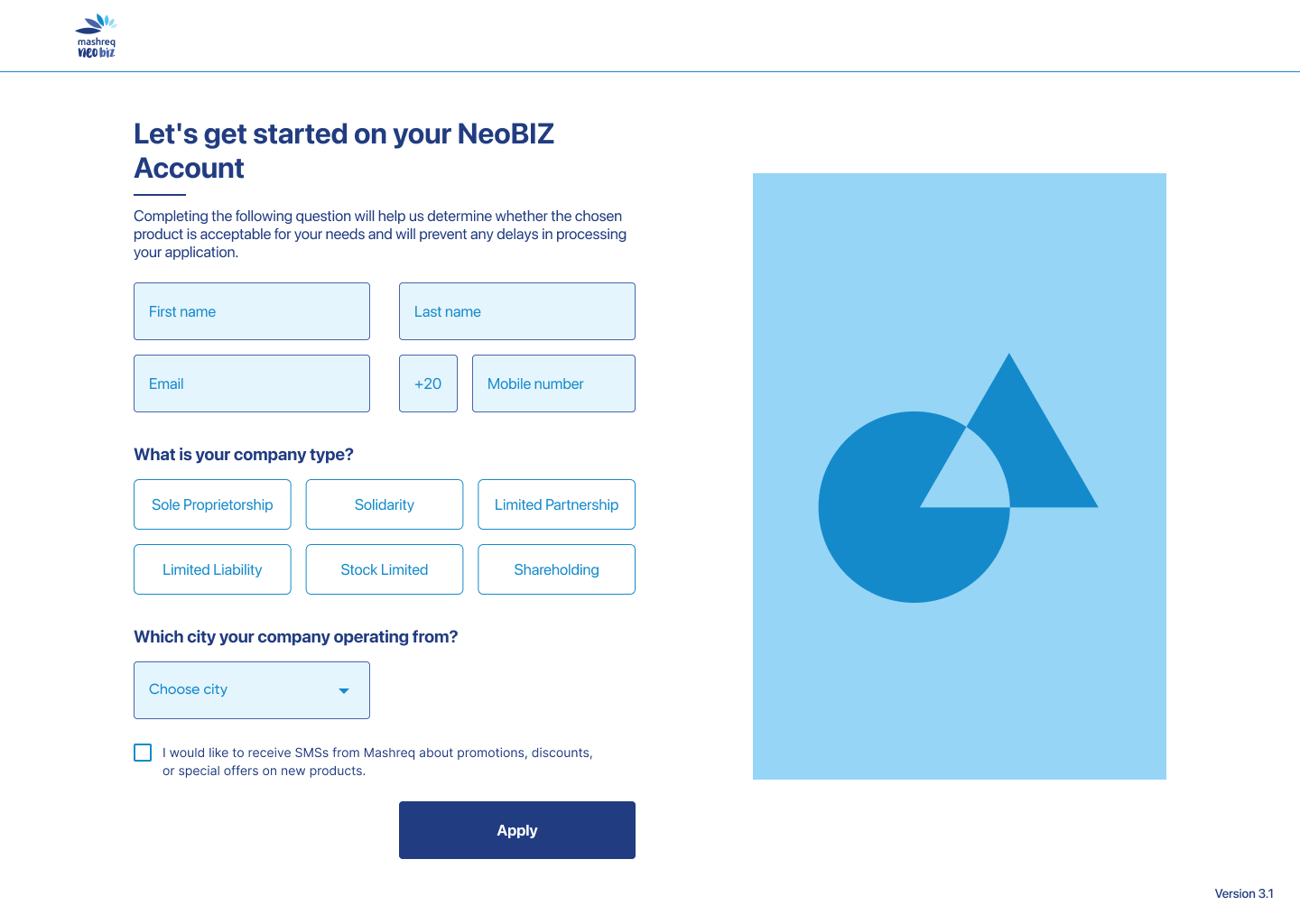
Sign up
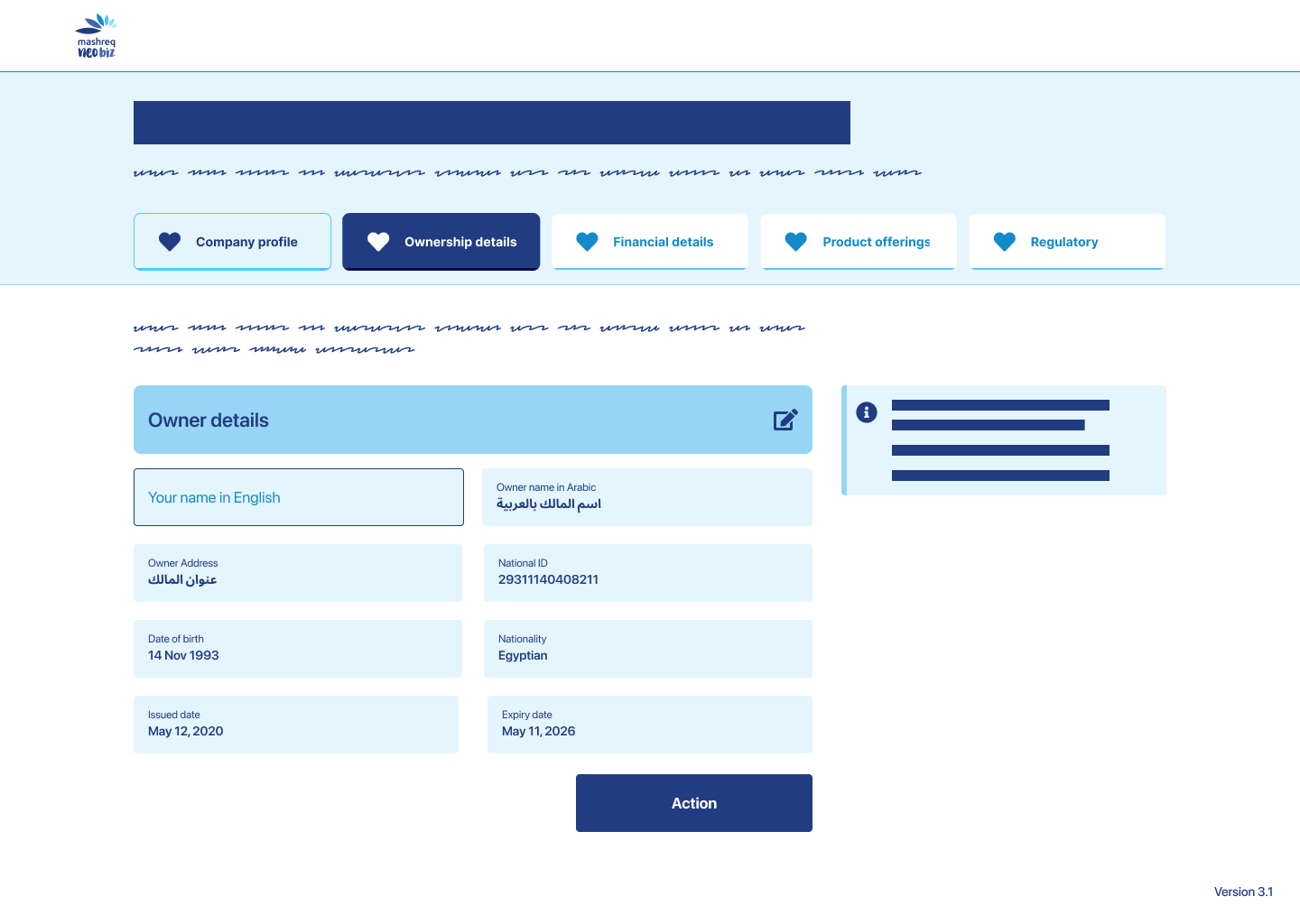
Confirming details
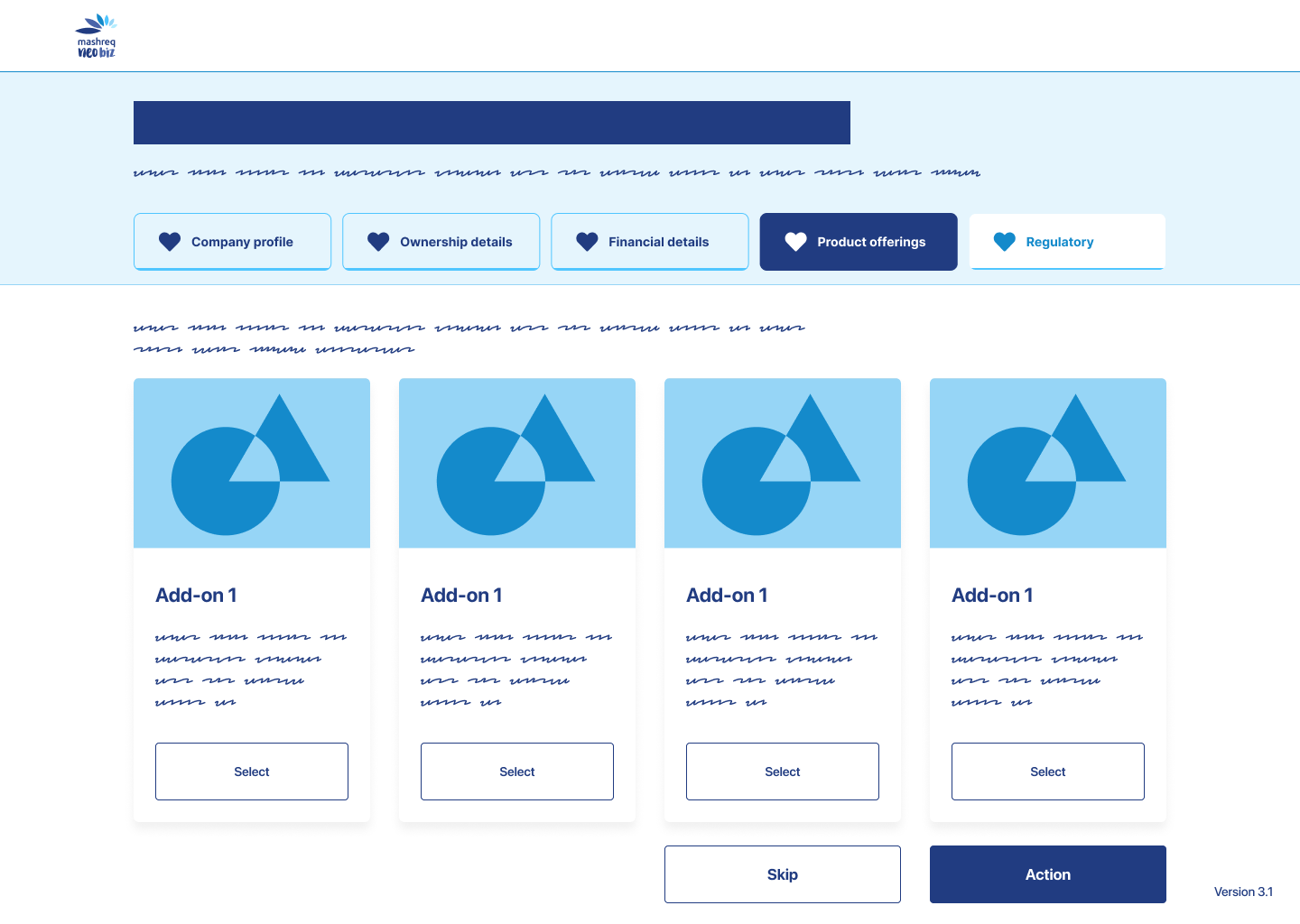
Addons services
Design in Action
User-Friendly Interface
Design Principles
I designed the interface around two things the research kept surfacing: making document submission as low-effort as possible, and putting the language switch at every step rather than only at entry.

English language version 🇬🇧
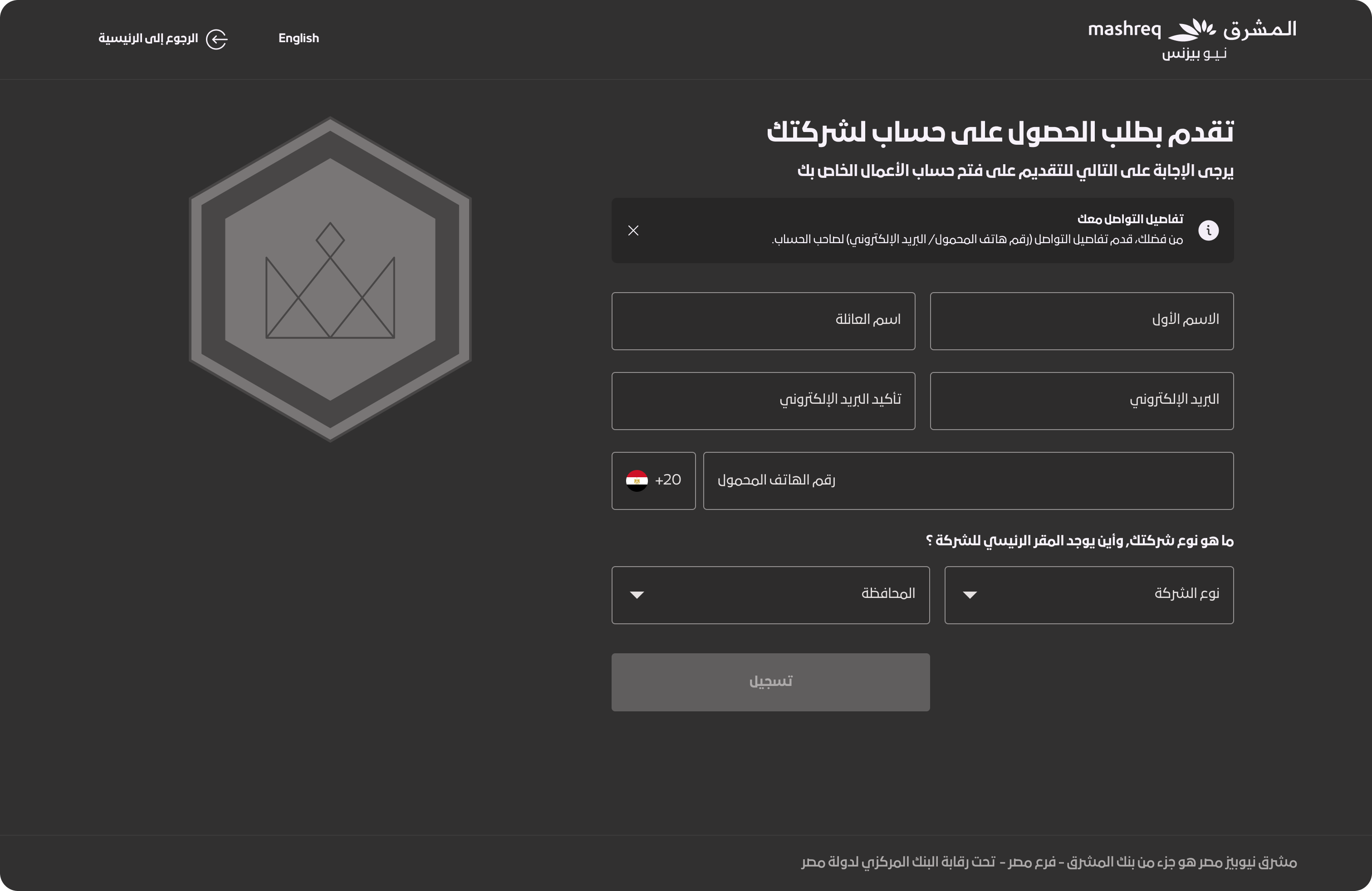
Arabic language version 🇪🇬
Secure Authentication
Security Measures
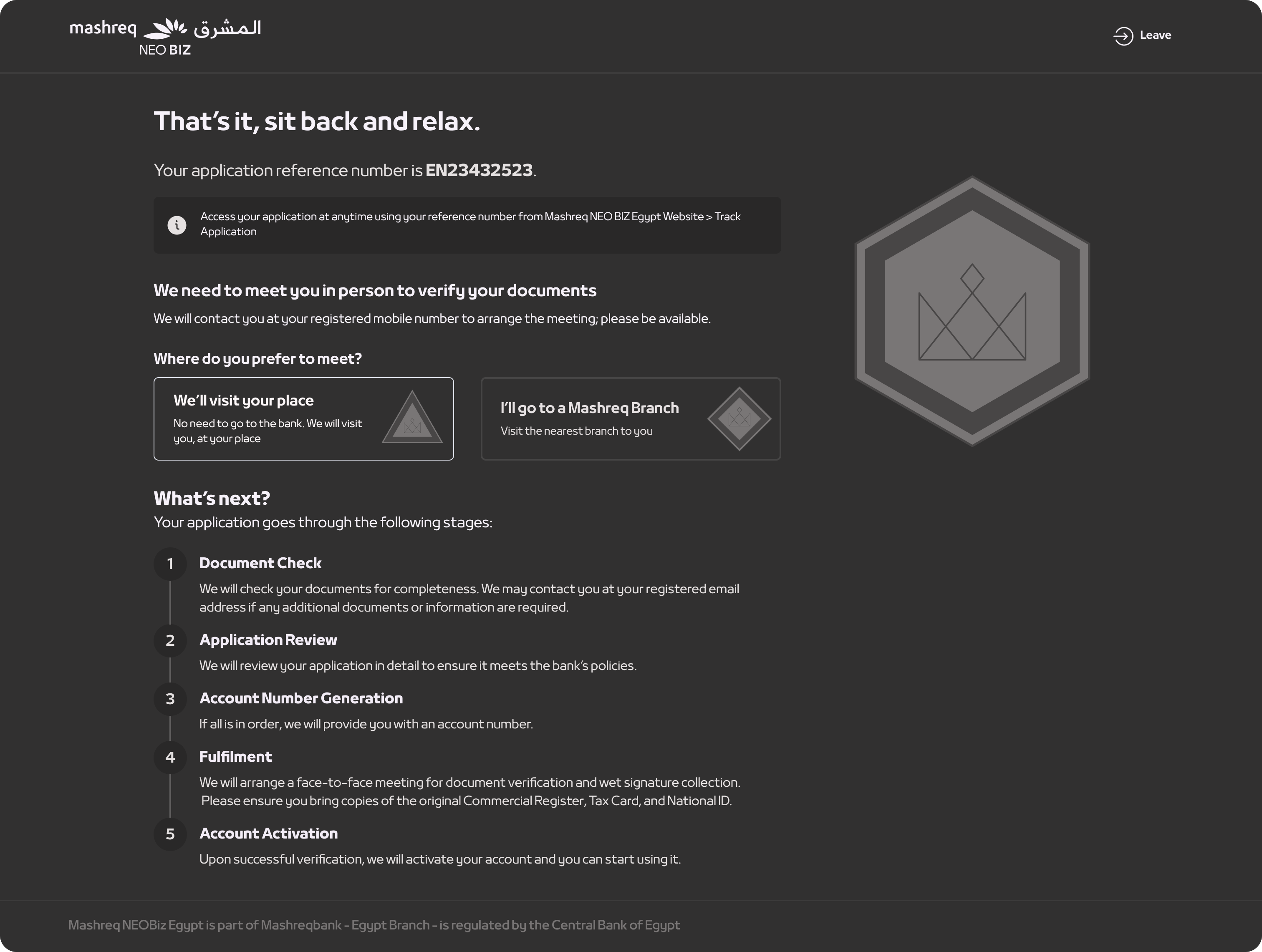
Egypt has no equivalent of the national biometric identity check available in the UAE, and Central Bank of Egypt rules require that original documents are sighted in person and that every partner holding more than 20% of the company, or holding signing authority, signs the account opening form in person. Identity verification therefore could not sit inside the digital journey at all. I designed around that rather than against it. OCR reads each document at the point of upload and checks it against the expected format for its type, so a missing document, an unreadable image or an illegible field is caught while the customer is still on the page. What OCR cannot confirm is that an uploaded copy matches a real original, and that is precisely what the in-person step exists to do. The customer chooses where it happens: at the bank, or at their own company address with a bank representative.
Step-by-Step Guidance
Onboarding Flow
The onboarding process was broken down into clear, manageable steps. Each step included concise instructions, visual cues, and support from the digital assistant to guide users through the process effortlessly.
The document upload step provided clear guidelines on the types of documents required and allowed users to submit files easily.
The flow also included language options at each step, ensuring that users could navigate the process in their preferred language.
Visuals
Visual representations of the onboarding flow demonstrated how each step was designed to be user-friendly and efficient.
Document Upload
Functionality
I designed the upload step so documents are checked for completeness and legibility at the point of submission rather than after the application is sent for review. Problems surface immediately and the customer can correct them inside the flow.
Communication
Emailers
To keep users informed and engaged throughout the onboarding process, a series of email notifications were designed. These emailers provided updates on the status of their account opening, reminders to complete any outstanding steps, and tips for using the digital assistant and language options. The communication strategy was crafted to ensure transparency and maintain a high level of customer satisfaction.
Testing
Usability Testing
Methods
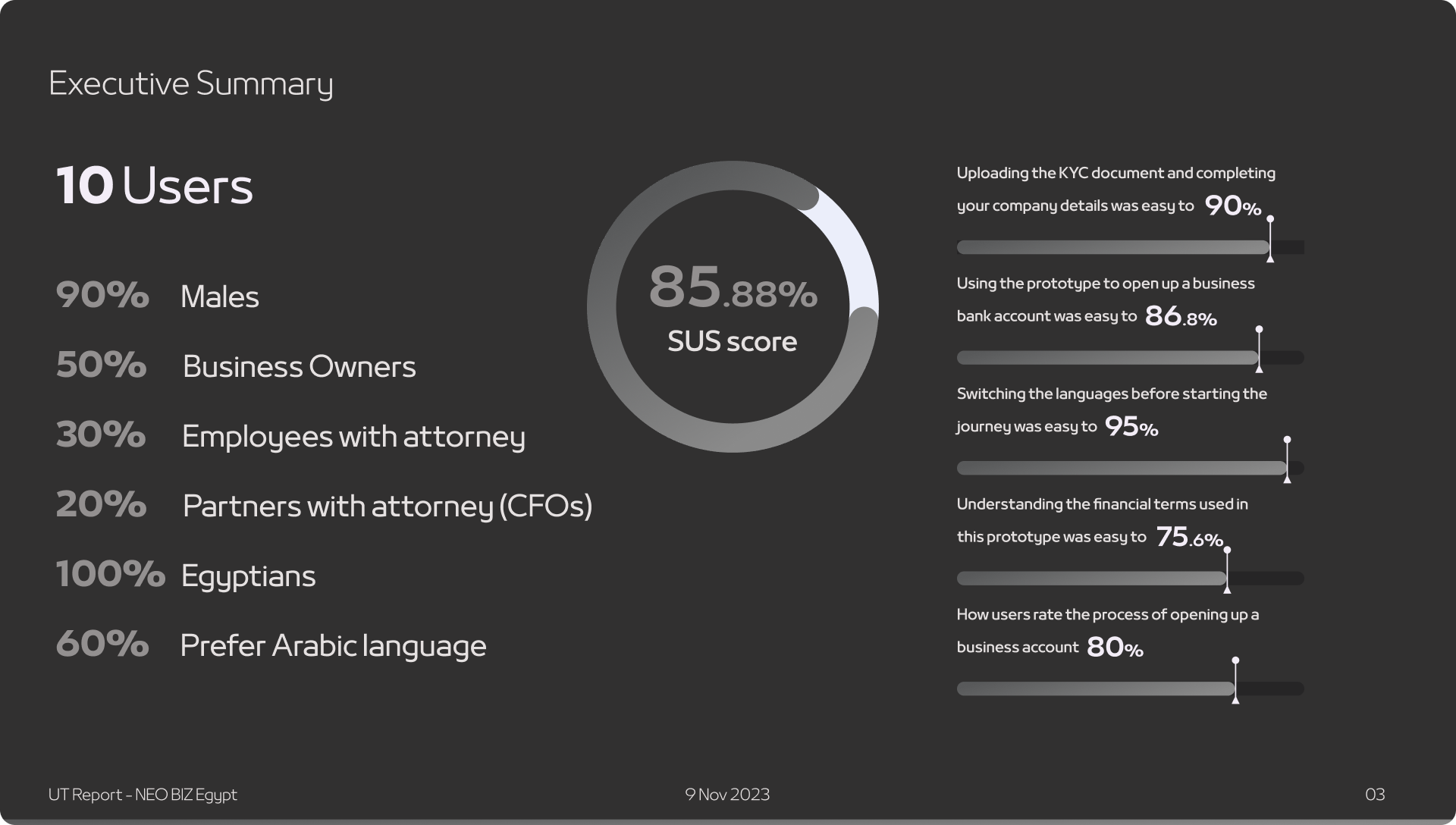
Conducted usability testing with real users to evaluate the effectiveness of the AI-powered document verification, digital assistant, and multilingual interface.
Key Findings
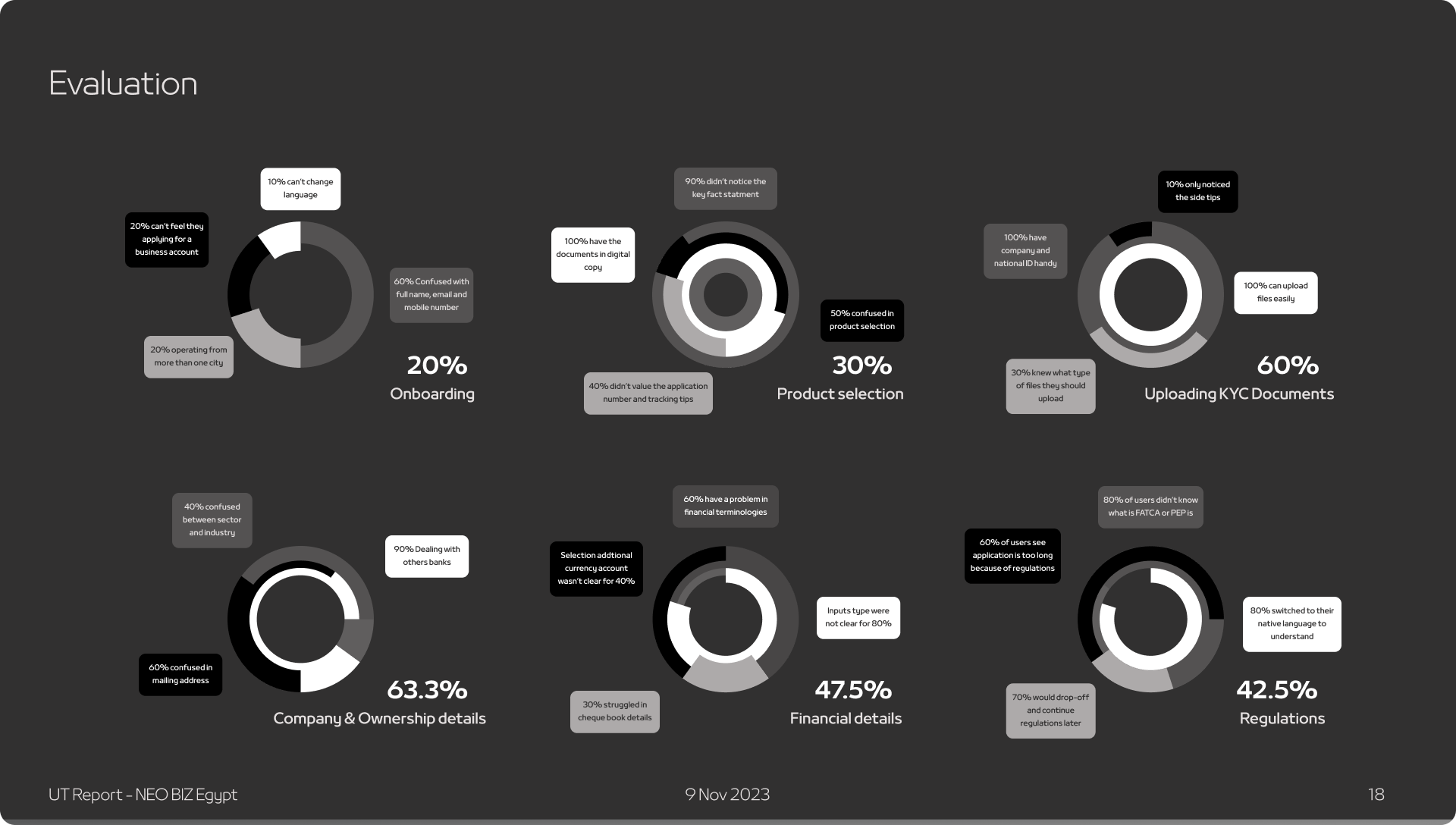
Feedback highlighted the need for minor adjustments in the document upload process and further refinement of the digital assistant’s responses.
Iterations and Refinements
Iterative Design Process
Made iterative refinements based on testing results, including improving the copy to be more accurate, enhancing the digital assistant’s guidance, and reducing irrelevant information requests.
Impact
Business impact
Increased Acquisition
Increased Efficiency:This was the first fully digital business banking onboarding journey in the Egyptian market: the application, the documents and the partner details all move from the branch counter to the customer's own screen, with no paperwork on the customer side. One in-person step remains, because Central Bank of Egypt rules require it rather than because the design failed to remove it. The work was to make that the only remaining step, to let the customer choose where it happens, and to make it the moment the account actually opens instead of the moment the waiting starts.
Higher Conversion Rates: Targets for verification time, completion rate, and satisfaction are stated in the objectives above. Post-launch measurement against them is owned by the business unit, not by design, and I do not have verified figures to publish here.
Customer Impact
Customer Satisfaction
Enhanced Satisfaction: Arabic and English are available at every step, not only at entry — a deliberate choice, because customers switch language mid-task when they hit unfamiliar financial or legal terminology, and forcing them back to the start to do it is where sessions get abandoned.
Increased Trust: Because verification completes after submission, the communication design carries the trust: email updates at each stage tell the customer where their application stands. Without that, a deferred check reads as silence, and silence reads as rejection.
Conclusion
Summary
The same product problem produced two different journeys across the two markets I worked in. In the UAE, national biometric infrastructure let verification sit inside the flow. In Egypt, no such infrastructure exists, so verification had to move after submission and the design had to carry the customer through the wait instead. The decision that mattered here was accepting that constraint rather than designing around it.
